
Thin-Walled Machining for Aerospace
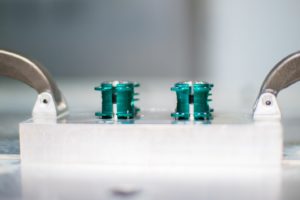 Experience and knowledge are keys to our success in providing precision machined parts for the aerospace market. We have a good understanding of aerospace design criteria, the benefits of weight reduction/maintaing part strength. One of the primary skill sets we have at Intrex for the aerospace market is thin-wall machining.
We apply our multiple years of experience, coupled with our up-to-date CNC machines, to produce high-quality thin-walled parts. The machining of thin-walled parts presents challenges beyond standard machining practices. These challenges apply to both turning and milling. There are four fundamental reasons thin-wall machining poses challenges. These are:
Poor Rigidity
Standard machining practice is undermined by the thin-wall workpiece definition. Thin-wall workpieces resist applying “normal” tool pressures, thus many standard machining practices are not effective. Successful machining of thin-wall space components requires understanding and application of correct tooling to compensate for poor workpiece rigidity.
Part Deformation
Thin-wall design parts have a tendency to deform during the machining process. Inherent to thin-wall parts is a weakness caused by thin walls. Machining success is determined by understanding and controlling the cutting forces that lead to deformation.
Work Holding
Proper work holding is key to successfully machining thin-wall space parts. Consideration must be given to part distortion during the machining process. Many parts require special work holding, special chuck jaws, and special chucks. Intrex has experience at implementing of work holding and cutting tool solutions.
Tooling Required
Knowledge and experience with tool geometries and applying proper feeds and speed is essential to successfully machining thin-walled parts. Machining thin walls presents unique challenges to avoid distorting the part. Intrex Aerospace has the tooling expertise to control the critical forces of heat distortion, feed and speeds, and tool geometry that impact machining thin wall parts.
The aerospace markets have many applications for thin-wall parts. Intrex Aerospace has a long and successful history of producing thin -all parts. We produce these type of machined components in various sizes and shapes. Our capital investment in CNC machines and support equipment is a testimony to our commitment to our customers and to the aerospace thin-wall market.
Many of our late-model purchases of CNC machines have multi-spindles and multi-axis simultaneous machining. There are inherent advantages in CNC multi-spindle, multi-axis machines. They can greatly reduce work setups. Our five-axis machines can machine nearly every visible surface, excluding the bottom or clamping area. This ability can significantly reduce the need for additional chucking/clamping and, in many cases, eliminates the need for special fixtures. By reducing the number of chucking/clamping, you reduce the possibilities for part distortion.
One of the great advantages of the design of multi-axis, multi-spindle CNC machines is the increased relational. Being able to pass the part from one spindle to the other and maintain a single “home” or “zero” reference to the work head helps maintain alignment and eliminate tolerance stack up.
In addition to our years of experience providing thin-walled machined components for the aerospace, Intrex provides systems service and support to meet the most demanding supply-chain requirements. Our Epicor ERP/MRP system is state-of-the-art.
We would welcome an opportunity to discuss your thin-wall machining requirements. For more information, contact Intrex Aerospace today.
