
Automation and CNC Machining
Jan 20, 2026Combining automation and CNC machining are becoming necessary steps in the aerospace manufacturing process. The driving impetus for this initiative, is to achieve higher productivity, more consistent product, and added competitiveness. Adding automation to CNC machines can be a game-changer. It takes traditional CNC machining and transforms it from a labor-intensive process into an efficient, scalable, and data-driven operation. By integrating automated systems such as robotic loaders, pallet changers, sensors, and software, manufacturers can significantly improve performance while reducing costs and minimizing human error.
Types of Automation
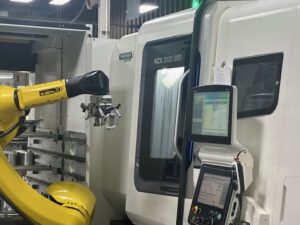
One of the most common applications of CNC automation is automated material handling. Robots or gantry systems can load raw materials into the machine and unload finished parts with minimal or no manual intervention. This allows for greater spindle optimization while reducing machine idle time, as parts can be exchanged quickly and consistently. Automated pallet changers allow one pallet to be in the machining zone while another is being prepared for loading, enabling near-continuous operation. The net result is CNC machines can run unattended for long periods, running nights and weekends, with little to no labor. This practice is often referred to as “lights-out manufacturing.” At Intrex, we recently added an additional robot loader system with a raw material stacker to one of our 5 axis DMG Mori machines. Depending on raw material size, it gives us the ability to run 8-14 hours unmanned.
Consistency
Automation and CNC machining is a way to improve achieve precision and consistency. While CNC machines are inherently accurate, manual loading and setup can introduce variability. Automated systems position parts with a high degree of repeatability, ensuring that each workpiece is presented into the machine the same way. This is especially important in industries such as aerospace, medical devices, and automotive manufacturing, where tight tolerances and quality standards are very high. By reducing human involvement in repetitive tasks, automation minimizes the risk of operator mistakes caused by fatigue or distraction.
Productivity
Another important benefit of adding automation to CNC machines is increased productivity. Automated CNC systems usually have higher throughput when compared to manual loading operations. By reducing the number of setups, or preparing setups outside the work zone, controlling consistent load/unload times, all contribute to higher output. This allows manufacturers to maximize their capital CNC assets and minimize labor costs. It is not uncommon for skilled operators to oversee multiple automated CNC machines, adding to overall efficiency and profitability.
Safety
Automation can also enhance workplace safety. CNC machining often involves moving and/or lifting heavy raw materials, navigating around sharp tools and moving components. By assigning hazardous or physically demanding tasks to robots, the risk of workplace injuries is significantly reduced. Utilizing automation, operators can focus on the higher skill level duties of monitoring processes, programming, quality control, and maintenance, eliminating the more repetitive and dangerous manual handling tasks. This not only improves safety but also increases job satisfaction.
Software
Another consideration in adding automation is software. With the advancement of the latest generations of CNC controls, manufacturing execution systems (MES), allow machines to communicate, collect data, and optimize performance in real time. Automated tool monitoring can detect wear or breakage and trigger tool changes before defects occur. Predictive maintenance systems analyze machine data to anticipate failures, reducing unplanned downtime and extending machine life.
Planning & Investment
Adding automation to CNC machines, requires careful planning and investment. The purchase of robots, integration services, and training can be significant. Not every production environment benefits equally from automation; high-mix, low-volume operations may require a more flexible automation solutions. We at Intrex analyze our production and make automation decisions based on production needs, part volumes and manufacturing efficiencies. Our direction is toward higher levels of automation, but there are still applications where it does not fit.
Adding automation and CNC machining as stated above can offer substantial benefits in productivity, quality, safety, and efficiency. It does require upfront investment (sometimes significant) but long-term returns often justify the cost. As technology continues to advance, CNC automation is becoming more accessible and adaptable, making it a key driver of innovation and competitiveness in modern manufacturing.
We Would Like to Hear from You
At Intrex we have adopted and utilize much of the automation mentioned above. If you would like to have a conversation with us, we would welcome the opportunity. Please click here for contact information.
